A good bag is not just something with straps to carry your stuff. It should also make your life easier.
Whether you need a bag for your daily commute to work, a weekend
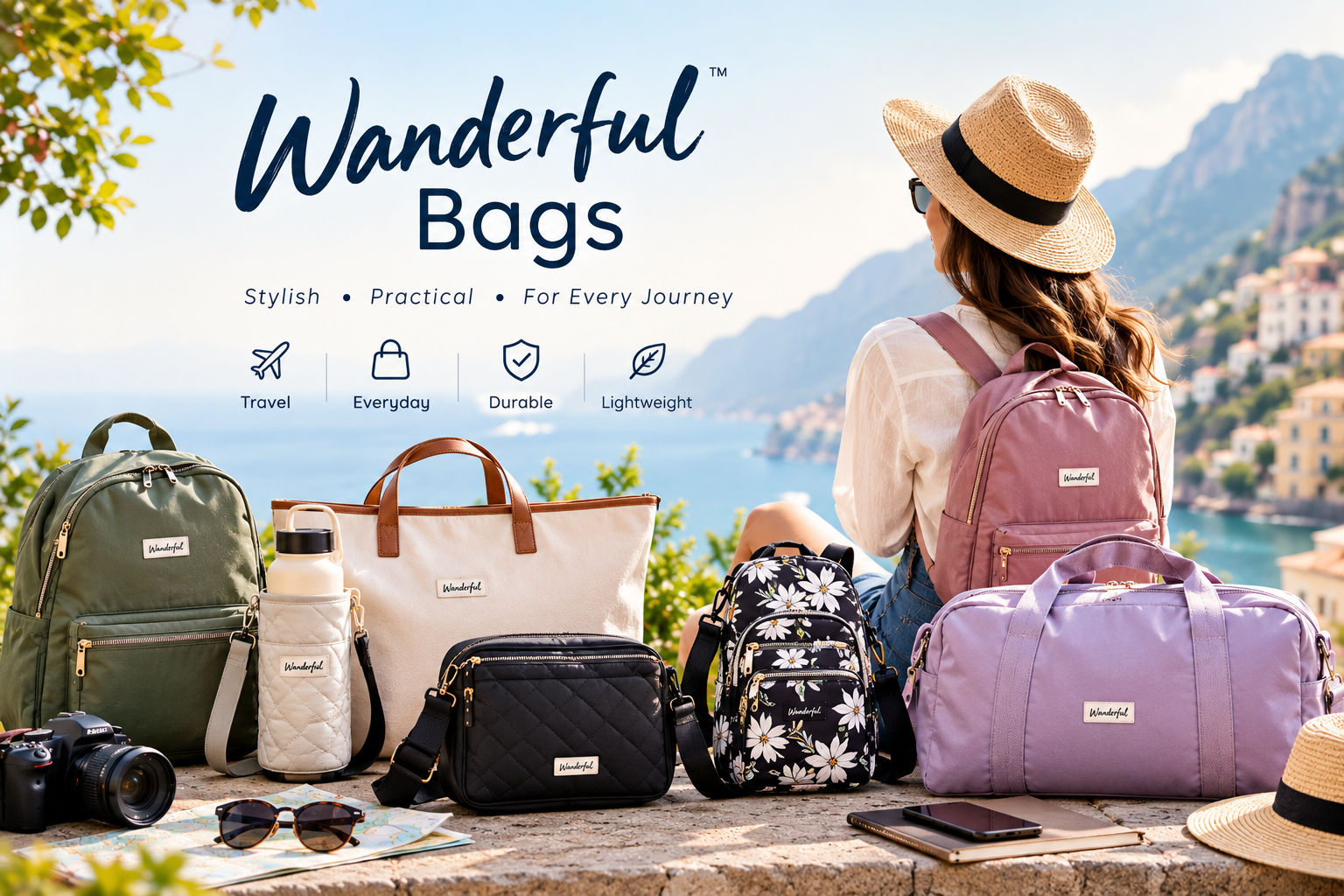
Whether you’re heading to work, planning a weekend trip, walking around a new city, going shopping, or spending a day outdoors, the right bag can keep your essentials organized without making you feel overloaded. That’s where wanderful bags come in.
The idea behind a great wanderful bag is simple: combine useful storage with a style that feels right for everyday life. A bag should have enough space for the things you actually need, comfortable straps, practical pockets, and a design that works with your routine.
But choosing the right bag isn’t always easy. There are crossbody bags, tote bags, backpacks, travel bags, shoulder bags, weekender bags, bottle bags, and countless other styles.
So how do you know which one is right for you?
This guide takes a practical approach to wanderful bags, looking at the features that matter, the best styles for different situations, how to choose the right size, how to organize your bag, and what to consider before buying one.
What Are Wanderful Bags?
The phrase wanderful bags can be used to describe bags designed for people who are always moving, exploring, traveling, shopping, working, or simply carrying their everyday essentials.
Unlike a bag designed only for appearance, a practical wanderful-style bag focuses on the balance between:
- Style
- Comfort
- Storage
- Durability
- Organization
- Versatility
- Portability
The best travel bags and everyday bags are usually the ones that fit naturally into your lifestyle.
For one person, that could mean a lightweight crossbody bag with space for a phone, wallet, passport, keys, and water bottle.
For another, it could mean a larger tote or weekender that can carry clothing, electronics, toiletries, and other travel essentials.
There isn’t one perfect bag for everyone.
The right choice depends on where you go, what you carry, and how you prefer to travel
Why the Right Bag Makes Such a Difference
People often think about a bag mainly in terms of appearance.
Color matters. Shape matters. Material matters.
But comfort and usability matter just as much.
Imagine carrying a beautiful bag through an airport for several hours. If the strap keeps slipping or the bag becomes uncomfortable when full, the attractive design won’t matter much.
The same applies to an everyday handbag. If everything ends up at the bottom of the bag, finding your keys or phone becomes frustrating.
A well-designed everyday bag solves small problems before they become annoying ones.
It gives important items a place.
It keeps your hands free when necessary.
It makes packing easier.
And it helps you carry what you need without carrying everything you own.
How to Choose the Best Wanderful Bag
There is no universal answer to the question, “What is the best wanderful bag?”
The best bag is the one that matches your specific needs.
Before buying one, think about these questions:
- Where will you use the bag?
- How much do you normally carry?
- Do you prefer hands-free carrying?
- Do you need a water-resistant material?
- Will you travel with it?
- Do you carry a laptop or tablet?
- Do you need quick-access pockets?
- Do you want a lightweight bag?
- Is appearance important to you?
- Will you use it every day or only occasionally?
Your answers can quickly narrow down the choices.
1. Consider the Size
Size is one of the most important things to consider when choosing wanderful bags.
A bag that is too small becomes frustrating because you constantly have to leave things behind.
A bag that is too large can encourage overpacking.
Think about the items you actually carry on a normal day.
For example:
Small bag:
- Phone
- Wallet
- Keys
- Sunglasses
- Small cosmetics
- Earbuds
Medium bag:
- Everything above
- Water bottle
- Small notebook
- Charger
- Travel documents
- Personal essentials
Large bag:
- Clothing
- Laptop or tablet
- Books
- Larger toiletries
- Travel accessories
- Additional personal items
The goal isn’t to choose the biggest bag.
The goal is to choose a size that gives you enough room without unnecessary bulk.
Crossbody Wanderful Bags
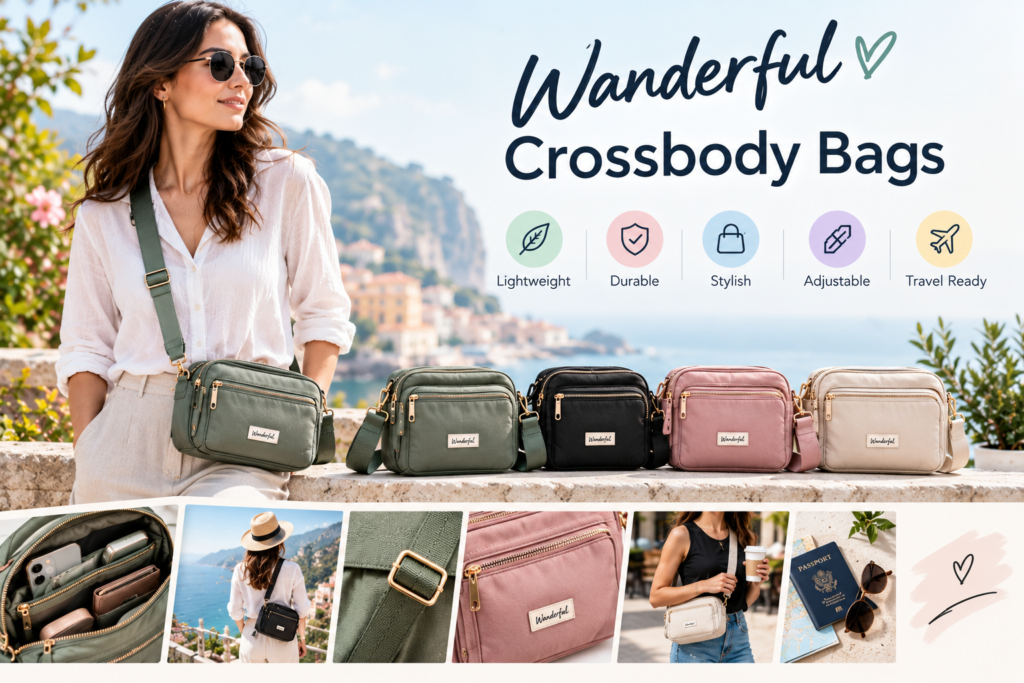
A crossbody bag is one of the most practical options for people who want their hands free.
The strap runs across the body, which makes the bag convenient for walking, shopping, sightseeing, commuting, and travel.
Crossbody bags are particularly useful when you don’t want to keep holding your bag.
Why Choose a Crossbody Bag?
- Hands-free design
- Easy access to essentials
- Comfortable for walking
- Useful for travel
- Usually lighter than large handbags
- Works well with casual outfits
A good crossbody bag should sit comfortably against your body without becoming awkward when you move.
When shopping for one, pay attention to strap adjustability.
A flexible strap lets you change the length depending on whether you’re wearing a coat, sweater, or lighter clothing.
Wanderful Tote Bags
A tote bag is a strong choice when you need more open storage.
Tote bags work well for:
- Shopping
- Work
- University
- Beach days
- Short trips
- Everyday errands
- Carrying books
- Carrying larger personal items
The main advantage is accessibility.
You can usually reach inside a tote quickly without opening multiple compartments.
The downside is that an open interior can become messy.
That’s why smaller pouches or organizers can be useful inside a larger tote.
Wanderful Travel Bags
For travel, a bag needs to do more than look attractive.
A good travel bag should help you organize your essentials while remaining comfortable to carry.
Think about the items you need during transit rather than the things already packed in your suitcase.
For example:
- Passport
- Phone
- Wallet
- Travel documents
- Charging cable
- Earbuds
- Water bottle
- Medication
- Sunglasses
- Small snacks
Having these items in an accessible travel handbag or crossbody bag can save you from repeatedly opening your main luggage.
Travel bags also need to fit your style of travel.
A city traveler may prefer a compact crossbody.
A road-trip traveler might prefer a larger tote.
Someone traveling for a weekend may prefer a weekend bag.
Wanderful Bags for Airport Travel
Airports are one place where bag design becomes especially important.
You may have to walk considerable distances, wait in lines, remove electronics, show documents, and move between terminals.
A useful airport bag should therefore provide easy access to the things you use frequently.
Useful Airport Bag Features
Look for:
- Comfortable straps
- Easy-access pockets
- Lightweight construction
- Secure closures
- Space for travel documents
- Room for charging accessories
- Water bottle storage
- A size that works with your airline’s baggage rules
Remember that airline baggage and personal-item rules vary.
Always check your airline’s current requirements before traveling rather than assuming that a particular bag size will qualify.
Water Bottle Bags and Hands-Free Hydration
One interesting category within the wider bag market is the water bottle bag.
These bags are designed to carry a reusable bottle while keeping your hands free.
Some designs combine bottle storage with small pockets for phones, cards, keys, and other essentials.
For example, the current WanderFull HydroBag product pages describe a puffer-style water bottle bag with space for bottles or tumblers and additional zippered storage. The listed dimensions are approximately 11 inches tall and 5 inches wide, with compatibility for bottles up to 3.5 inches in diameter.
That type of design can be useful for:
- Walking
- Travel
- Festivals
- Sporting events
- Sightseeing
- Outdoor activities
- Casual daily use
The important thing is to check the actual dimensions of your bottle before buying.
A bottle that fits one carrier may not fit another.
What Makes a Good Everyday Bag?
An everyday bag needs to be practical enough for repeated use.
You don’t want to think about your bag every time you leave the house.
Ideally, it should become something you simply pick up and go.
Look for These Features
Comfortable straps:
A strap that feels fine for ten minutes may not feel fine after several hours.
Useful pockets:
Small compartments can make a huge difference when you’re searching for keys or earbuds.
Secure closure:
Zippers, snaps, or other closures can help keep your belongings secure.
Reasonable weight:
An unnecessarily heavy empty bag becomes much heavier once you fill it.
Durable construction:
Stitching, straps, hardware, and high-contact areas deserve attention.
Easy maintenance:
A bag that is difficult to clean may become inconvenient with frequent use.
Material Matters More Than You Think
The material of a bag affects its appearance, weight, durability, maintenance, and sometimes weather resistance.
Common options include:
Canvas
Canvas bags are popular because they can offer a casual appearance and practical durability.
They are often suitable for:
- Everyday use
- Shopping
- Travel
- Casual outfits
Nylon
Nylon is commonly chosen for lightweight and practical bags.
Depending on its construction and treatment, it may also offer useful resistance to moisture.
Leather
Leather bags are often chosen for their appearance, feel, and long-term appeal.
However, leather usually requires more care than some synthetic materials.
Vegan Leather
Vegan leather can provide a leather-like appearance without traditional animal leather.
Quality can vary significantly, so buyers should look at construction and material specifications rather than relying only on the label.
Quilted or Puffer Materials
Quilted and puffer-style bags have become popular for people who want a softer, more casual appearance.
Some current water bottle bags, including WanderFull’s HydroBag, use quilted or puffer-style construction.
How to Choose a Bag for Your Lifestyle
Your lifestyle should determine your bag more than fashion trends.
For Students
A student may need:
- Books
- Laptop or tablet
- Charger
- Notebook
- Water bottle
- Small personal items
A backpack or larger tote may work better than a small handbag.
For Office Workers
A professional may need:
- Laptop
- Charger
- Notebook
- Wallet
- Phone
- Lunch
- Personal items
A structured tote or laptop-friendly work bag can be useful.
For Travelers
Travelers often need:
- Passport
- Phone
- Wallet
- Water
- Travel documents
- Charging accessories
- Sunglasses
- Small toiletries
A secure crossbody or travel organizer can work well.
For Outdoor Activities
For walking, festivals, sightseeing, or casual outdoor activities, lightweight hands-free bags can be more practical.
The less you need to hold, the easier it is to move around.
How to Organize Your Wanderful Bag
Even a well-designed bag can become messy without a simple organization system.
Try dividing your belongings into groups.
Pocket One: Frequently Used Items
Keep your phone, keys, and wallet where you can reach them quickly.
Pocket Two: Personal Items
Use a smaller compartment or pouch for cosmetics, tissues, or other personal items.
Main Compartment: Larger Essentials
Keep notebooks, sunglasses cases, chargers, and other larger objects here.
Bottle Area
If your bag has dedicated bottle storage, use it rather than placing a bottle loosely inside.
This can reduce spills and make the bag easier to organize.
The One-Bag Test
Here’s a simple test you can use before buying any bag.
Imagine that you’re leaving home for a normal day.
Write down everything you actually carry.
Then ask:
Would all of these items fit comfortably?
Next, ask:
Would I still be comfortable carrying it after several hours?
Finally:
Could I quickly find the three things I use most?
If the answer is yes to all three, you’re probably closer to the right design.
Stylish Bags vs. Practical Bags
Do you really have to choose between style and function?
Not necessarily.
Modern bag designs increasingly combine both.
A practical bag can still have:
- Interesting colors
- Patterned fabrics
- Modern hardware
- Quilted textures
- Minimalist shapes
- Fashionable straps
- Elegant finishes
The trick is to choose a style that works with your existing wardrobe.
If you want one bag for frequent use, neutral colors can be easier to match.
If you already own several basic bags, a brighter print can add variety.
How to Choose the Right Bag Color
Color is mostly a personal choice, but your intended use can help.
Black
Easy to combine with many outfits and suitable for professional or casual settings.
Beige or Neutral
A softer choice that can work well with light-colored clothing.
Brown
Often works nicely with warm colors and casual outfits.
White
Clean and modern, but may require more frequent cleaning.
Bright Colors
Useful when you want the bag to become part of the outfit rather than simply blend in.
Prints
Printed bags can add personality and work particularly well for casual travel, vacations, and summer outfits.
What Should You Look for in a Travel Bag?
If you’re specifically searching for the best travel bag, don’t judge it only by photographs.
Check the specifications.
1. Dimensions
Know the exact measurements.
2. Weight
A heavy empty bag can become uncomfortable when packed.
3. Strap
Check whether it is adjustable and comfortable.
4. Compartments
Think about how many sections you actually need.
5. Closure
Make sure your belongings can be secured.
6. Material
Consider weather, cleaning, and expected use.
7. Capacity
Don’t confuse physical size with usable storage.
A bag can look large but have less practical capacity because of its shape or internal structure.
Best Wanderful Bags for Different Situations
| Situation | Bag Style to Consider | Why |
|---|---|---|
| Daily errands | Crossbody | Lightweight and hands-free |
| Shopping | Tote | Open, easy-access storage |
| Weekend trip | Weekender | More room for clothing and essentials |
| Airport | Travel crossbody | Easy access to documents |
| Work | Structured tote | Professional and spacious |
| College | Backpack | Comfortable for heavier loads |
| Walking | Small crossbody | Keeps essentials close |
| Outdoor events | Water bottle bag | Combines hydration and small-item storage |
| Beach | Large tote | Useful for larger essentials |
| Short sightseeing trips | Compact crossbody | Easy to carry for long periods |
Are Expensive Bags Always Better?
No.
Price can reflect materials, construction, design, brand positioning, craftsmanship, and other factors, but a higher price does not automatically mean that a bag is better for your needs.
Instead of asking:
“Is this bag expensive?”
Ask:
“Does this bag offer the features I actually need?”
A moderately priced bag that you use constantly can provide more practical value than an expensive bag that stays in your closet.
How to Check Bag Quality Before Buying
You can learn a lot from product photos and descriptions, but if possible, inspect the physical construction.
Pay attention to:
Stitching
Look for consistent stitching around straps, handles, pockets, and seams.
Hardware
Zippers, buckles, clips, and rings should feel appropriate for the bag’s intended use.
Straps
Check where the straps connect to the main body.
This is an area that experiences repeated stress.
Interior
Look at the lining and pocket construction.
Base
For larger bags, a reinforced or structured base can help the bag maintain its shape.
How to Take Care of Your Wanderful Bag
A little maintenance can make a bag last longer.
Don’t Overfill It
A bag has a practical capacity.
If you constantly force extra items inside, you can put unnecessary stress on zippers, seams, and straps.
Clean According to the Material
Don’t assume every bag can go into a washing machine.
Follow the manufacturer’s care instructions.
For example, the current WanderFull HydroBag product information recommends spot cleaning with a damp cloth and mild soap followed by air drying.
Empty It Regularly
Remove receipts, wrappers, old papers, and other items you don’t need.
Store It Properly
When you’re not using a structured bag, avoid storing it under heavy objects that could permanently distort its shape.
Sustainable Choices When Buying Bags
A bag does not become sustainable simply because the marketing uses words such as “eco,” “green,” or “conscious.”
Look for specific information.
Consider:
- How long the bag is likely to last
- Whether the materials are clearly identified
- Whether replacement parts are available
- Whether the product can be repaired
- How frequently you will actually use it
- Whether you genuinely need another bag
One of the simplest ways to make a more responsible purchase is to choose something you will use repeatedly.
A bag that sits unused in a closet provides little practical value regardless of the material used to make it.
Wanderful Bags for Travel: What Should You Pack?
If you’re using a smaller travel bag, keep it focused.
Essentials
- Passport
- Wallet
- Phone
- Keys
- Travel documents
Comfort Items
- Earbuds
- Sunglasses
- Small snack
- Tissues
Technology
- Charging cable
- Power bank where permitted
- Small adapter if needed
Hydration
A reusable water bottle can be useful where appropriate.
If you’re using a dedicated water bottle crossbody bag, check the bottle dimensions before your trip.
Why Hands-Free Bags Are So Useful
A hands-free bag gives you freedom to move without constantly holding something.
That can be particularly useful when:
- Taking photographs
- Shopping
- Walking
- Using public transport
- Traveling
- Attending events
- Exploring a new city
A crossbody or water bottle bag can keep essential items close while leaving both hands available.
For travelers, that small convenience can make a surprisingly big difference.
Small Bag or Large Bag: Which Is Better?
It depends on your habits.
Choose a small bag if:
- You carry only essentials
- You prefer lightweight accessories
- You walk frequently
- You don’t like carrying unnecessary items
Choose a larger bag if:
- You carry electronics
- You need extra clothing
- You carry books
- You regularly shop
- You need more personal items
The mistake is choosing a large bag because it might be useful someday.
Choose based on what you actually carry.
How to Avoid Overpacking Your Bag
Overpacking is one of the easiest ways to make a good bag uncomfortable.
Before leaving home, ask:
Have I used this item recently?
If the answer is no, ask:
Do I realistically expect to need it today?
You might discover that half of the items in your bag are there simply because you never removed them.
A five-minute bag cleanout once a week can make everyday carrying much easier.
What Makes a Bag Travel-Friendly?
A travel-friendly bag usually has three characteristics:
It is comfortable.
You can carry it for a reasonable amount of time.
It is organized.
You know where your important items are.
It is appropriately sized.
It holds what you need without becoming unnecessarily bulky.
That sounds simple, but these three qualities are often more important than a complicated list of extra features.
Wanderful Bags as Gifts
A practical bag can also make a useful gift.
Instead of choosing one based entirely on appearance, think about the person’s lifestyle.
For a Frequent Traveler
Choose a compact travel bag or crossbody.
For a Student
Consider a backpack or spacious tote.
For Someone Who Walks Often
A lightweight crossbody or bottle carrier could be useful.
For a Fashion Lover
Look for interesting textures, colors, prints, or distinctive hardware.
For a Golfer or Sports Enthusiast
Choose a specialized bag if it genuinely matches the person’s activity.
Some current WanderFull products, for example, include specialized versions designed around activities such as golf, with additional features such as a built-in tee holder.
Questions to Ask Before Buying Wanderful Bags
Before clicking “buy,” take a minute to answer these questions.
Will I use it regularly?
If not, reconsider.
Does it fit my essentials?
Check the actual dimensions rather than guessing.
Is the strap comfortable?
This matters especially for crossbody and shoulder bags.
Can I organize the inside?
Look for useful pockets if organization is important to you.
Is the material suitable for my lifestyle?
A beach bag and an office bag don’t necessarily need the same material.
Is it easy to maintain?
A beautiful bag that requires constant special care may not be practical for everyday use.
Does it work with my wardrobe?
If you’re buying one everyday bag, versatility is valuable.
How to Build a Small Bag Collection
You don’t need twenty bags.
A small collection can cover most situations.
Consider starting with:
1. Everyday Crossbody
For daily errands and casual outings.
2. Larger Tote
For shopping, work, or days when you need more space.
3. Travel Bag
For passports, electronics, documents, and other travel essentials.
4. Weekender
For short trips.
5. Specialized Bag
For activities such as hiking, sports, or carrying a water bottle.
This approach gives you different options without buying bags you rarely use.
The Future of Everyday Bags
Bag design continues to move toward a combination of fashion and function.
People increasingly want products that fit several parts of their lives.
A bag may need to work for:
Morning commute → afternoon errands → evening outing
That means flexible designs are becoming more useful.
Features such as adjustable straps, multiple compartments, lightweight construction, water-resistant sections, and hands-free carrying can make a bag more adaptable.
But the most useful design isn’t necessarily the one with the most features.
It is the one where the features actually solve a problem.
A Practical Buying Checklist
Before purchasing your next wanderful bag, save this checklist.
Comfort
- Is the strap comfortable?
- Is the bag lightweight enough?
- Will I carry it for long periods?
Storage
- Does it fit my essentials?
- Are there useful compartments?
- Can I reach frequently used items easily?
Quality
- Does the stitching look strong?
- Are the straps securely attached?
- Do the zippers and hardware feel reliable?
Style
- Does the design match my wardrobe?
- Can I use it in different situations?
- Will I still like the design next year?
Practicality
- Is it easy to clean?
- Is the material appropriate?
- Does it suit my daily routine?
Frequently Asked Questions About Wanderful Bags
What are wanderful bags used for?
Wanderful bags can be used for everyday activities, travel, shopping, outdoor activities, work, and casual outings. The best style depends on how much you carry and where you plan to use it.
What is the best bag for traveling?
The best travel bag is one that is comfortable, appropriately sized, secure, and easy to organize. A crossbody can work well for essentials, while a larger tote or weekender can carry more items.
Are crossbody bags good for travel?
Yes. Crossbody bags are popular for travel because they allow hands-free movement while keeping essential items close and accessible.
What should I carry in a travel bag?
Common travel essentials include your passport, wallet, phone, keys, travel documents, charging accessories, sunglasses, and other small personal items.
Are water bottle bags useful?
A water bottle bag can be useful if you want to carry a reusable bottle while keeping your hands free. Some designs also include pockets for small essentials. Check the manufacturer’s size specifications to make sure your bottle fits.
How do I choose the right bag size?
Start by listing the items you normally carry. Choose a bag that comfortably holds those items without giving you so much extra space that you end up overpacking.
What material is best for a travel bag?
There is no single best material. Nylon, canvas, leather, vegan leather, and other materials each have different characteristics. Consider weight, durability, maintenance, appearance, and weather conditions.
How can I make my bag more organized?
Use separate compartments or small pouches for different categories of items. Keep frequently used things near the top or in an easy-access pocket.
Are expensive bags worth buying?
Not necessarily. The right bag should provide the features, comfort, quality, and durability you actually need. Price alone does not determine whether a bag is right for you.
What is the best everyday bag for women?
There is no single best choice. A crossbody is useful for lightweight everyday carrying, while a tote may be better when you need more space. The right choice depends on your routine and personal preferences.
Final Thoughts: Finding Your Wanderful Bag
The best wanderful bag isn’t necessarily the most expensive, the largest, or the most fashionable one.
It’s the bag that fits naturally into your life.
If you travel frequently, focus on comfort and organization.
If you spend most of your time running errands, a lightweight crossbody may be enough.
If you carry many items every day, consider a larger tote or backpack.
And if hydration is part of your daily routine, a dedicated water bottle bag can be a practical alternative to carrying a bottle separately.
Before buying, think beyond the photograph.
Look at dimensions.
Check the material.
Think about comfort.
Consider how you will actually use it.
Most importantly, buy for your real lifestyle rather than an imaginary one.
A beautiful bag is nice.
A beautiful bag that makes your day easier is even better.
That’s what makes a bag truly wanderful.